Leo XIV: the shepherd, the pontiff and the head of state for the recovery of social morality
Carlos Sánchez Berzaín
November 18, 2026
(Interamerican Institute for Democracy) Pope Leo XIV’s apostolic journey to South America, visiting Uruguay, Argentina, and Peru, demonstrates the extraordinary influence of the Pastor, Pontiff, and Head of State. In his liturgical celebrations, ecclesial gatherings, public rallies, and interactions with authorities and representatives of society, he emphasized the need to restore social morality. His messages in the ten cities he visited reaffirmed and reminded people of the principles, values, customs, beliefs, and norms necessary to distinguish between good and evil.
The Pope holds three powers: he is the Shepherd of Catholics, their spiritual leader, the highest authority guiding the congregation of believers; he is the Supreme Pontiff, “the supreme prelate of the Roman Catholic Church,” the supreme head of the ecclesiastical structure of a global organization encompassing all ordained clergy and the congregation of the faithful; and he is the Head of State of Vatican City, the Absolute Monarch with “full legislative, executive, and judicial powers” that he can delegate. This trinity of authority ensures that 1.422 billion believers follow the Shepherd, that the ecclesiastical structure obeys the Pontiff, and that the Head of State is recognized in political and international relations. No one else in the world today wields such a sum of influence.
Latin America is considered the “main stronghold of Catholicism in the world,” but according to Latinobarometer survey data, “in 1995, 80% of Latin Americans identified as Catholic, and by 2026, this figure had fallen to 55%. In Uruguay, a Cifra poll conducted before Pope Leo XIV’s visit reported that 33% of adults considered themselves Catholic, compared to 58% in 1997. In Argentina, Infobae reported that before the Pope’s visit, “57.7% of the population aged 16 and over identified as Catholic, compared to 90% in 1960.” In Peru, Infobae, citing the Pew Research Center, noted that “nearly two-thirds of Peruvian adults identify as Catholic,” although “this number is decreasing over time.”
In Uruguay, Argentina, and Peru, Leo XIV’s message was not only for Catholics and was not about religious proselytizing. It was addressed to all citizens, believers and non-believers alike, to clergy, and to the authorities and political leaders of the countries visited, with an undeniable impact at all levels throughout the region. His main themes were «good and evil, human dignity, the common good, public ethics, the dignity of work, an economy at the service of the person, social justice, peace, fraternity, corporate responsibility, and ethical transformation.»
All the topics raised by Leo XIV relate to “social morality,” which is “a set of values, principles, norms, customs, and beliefs accepted as correct to distinguish between good and bad, between right and wrong, between good and evil, with the aim of ensuring peaceful coexistence, cooperation, and the general well-being of the community.”
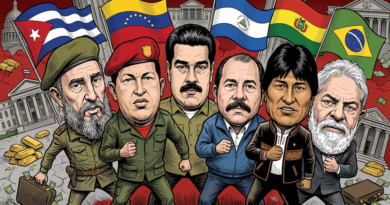
The objective reality of the 21st century proves that social morality in Latin America has been altered because politics has been “supplanted by organized crime, extending the oppression of more than 67 years in Cuba and expanding its system in Venezuela, Nicaragua, Bolivia, and Ecuador, and its methodology in subordinate or para-dictatorial governments.” Narco-states, corruption and impunity, increased poverty and destitution, the rise and institutionalization of human rights violations, citizen insecurity, the defenselessness of the people, the loss of the concept of the common good, the disregard for public ethics, the proliferation of confrontation, and the destruction of democratic structures are all evidence of this.
It is this reality that highlights the value of Leo XIV’s message for the recovery of social morality in Latin America, in short:
-In Uruguay: “Political authority should not be conceived as a privilege, but as a responsibility at the service of the citizenry. The legitimacy of public office is linked to the pursuit of the common good and respect for the dignity of all people.”
-In Argentina: “national coexistence requires harmony, recognition of diversity and a shared commitment to the dignity of each person and the common good”; “The economy must be at the service of the person and the person at the service of the economy”; “economic development should not be evaluated solely by profitability or aggregate growth, but also by its contribution to labor dignity, inclusion and collective well-being.”
-In Peru: “For families, peace has a very concrete meaning: going out to work without fear, taking care of their children, and returning home with serenity”; “It pains us to see that violence against women—who could be our grandmothers, mothers, sisters, daughters—remains a reality that wounds all of humanity”; “Education becomes a practical instrument for principles to become concrete…”; “Democratic life implies recognizing that no one has all the answers…”; “I would like to encourage everyone to cultivate honesty, integrity, and a willingness to engage, qualities that sustain trust among people and give solidity to the life of institutions.”
Lawyer and Political Scientist. Director of the Interamerican Institute for Democracy
Published in Spanish by infobae.com Monday November 16, 2026
Translated from Spanish by; Edgar L. Terrazas, member of the American Translators Association, ATA # 234680.
Published in Spanish by Infobae.com Sunday November 18, 2026