Maduro’s Downfall a Setback for US Adversaries, Experts Say
(Theepochtimes.com) The capture of Venezuelan socialist dictator Nicolás Maduro by the U.S. military on Jan. 3 could prove a blow for U.S. adversaries in the region, experts and former cabinet members of South American countries say.
“China and Russia [now] lose their main platform in Latin America, a platform they have invested in and protected since the beginning of the century,” Ernesto Araújo, Brazil’s former minister of Foreign Affairs, told The Epoch Times.
Under Maduro, communist China’s footprint in Venezuela grew ever larger, with both countries announcing in 2023 an “all-weather strategic partnership,” the highest level of diplomatic partnership bestowed by the Chinese regime. Russia similarly signed a “strategic partnership” agreement in 2025. In both cases, it was symbolic of long-standing ties in finance, oil, and military cooperation.
“Venezuela was essential for their strategy consisting both of harming the U.S. from inside the Western Hemisphere through conventional and unconventional threats, and transforming the whole of Latin America in a bloc totally aligned to China and Russia. All that has come to nothing with the fall of Maduro,” Araújo said.
Maduro now faces trial in the Southern District of New York. He was charged with four counts of offenses related to drug trafficking and illegal handling of firearms. His wife Cilia Flores and other accomplices were also charged alongside him on a superseding indictment unsealed on Jan. 3, the same day he and his wife were captured. Maduro had previously been indicted in 2020 on similar grounds.
Both the 2020 and the 2026 indictments reference attempts by the Maduro regime to deliberately harm the United States through drug trafficking as a method of unconventional warfare.
“Between in or about October 2015 and in or about November 2015, Efrain Campo Flores and Franqui Francisco Flores de Freitass—two relatives of [Maduro] and [Flores]—agreed during recorded meetings with DEA confidential sources to dispatch multi-hundred-kilogram cocaine shipments from [Maduro’s] ‘presidential hangar’ at the Maiquetia Airport,” the fresh Jan. 3 indictment reads, quoting the nephews of Maduro’s wife.
“During recorded meetings with the sources, Campo Flores and Flores de Freitas explained that they were at ‘war’ with the United States.”
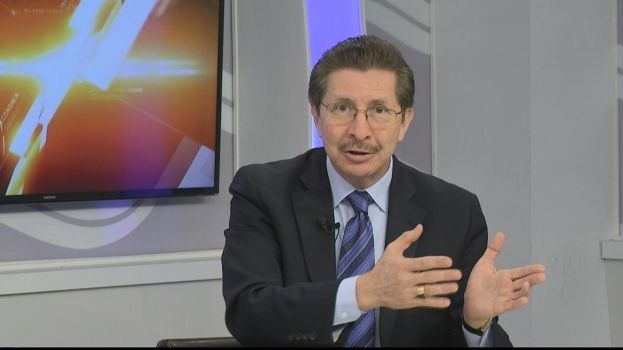
Carlos Sanchez Berzain, former minister of defense for Bolivia, told the Epoch Times that U.S. pressure has “begun to remove China, Russia, and Iran’s involvement in the hemisphere.”
“This is the implementation of the U.S. National Security Strategy, which in November 2025 updated the Monroe Doctrine with the Trump Corollary,” he said.
The Monroe Doctrine is a policy dating back to U.S. President James Monroe, who in 1823 warned European powers not to interfere in affairs of the Western Hemisphere. It solidified Washington’s stance on recognizing the independence of countries in the American continent, instead of considering them as rebel provinces of European nations.
This policy has since been evoked occasionally to justify U.S. involvement throughout the Americas. The U.S. 2025 National Security Strategy, a document published in late November by the Trump administration, says that “after years of neglect, the United States will reassert and enforce the Monroe Doctrine to restore American preeminence in the Western Hemisphere.”
“We will deny non-Hemispheric competitors the ability to position forces or other threatening capabilities, or to own or control strategically vital assets, in our Hemisphere,” the document reads. “This ‘Trump Corollary’ to the Monroe Doctrine is a common-sense and potent restoration of American power and priorities, consistent with American security interests.”
Berzain, referencing Russia and China, said that “the impact [of Maduro’s capture] on these extra-hemispheric dictatorships is direct because all oil and commercial activity between Venezuela and these countries will have to cease and be replaced by the United States.”
Robert Evan Ellis, a Latin America research professor at the U.S. Army War College and former official at the State Department’s Policy Planning Staff for Latin America during the first Trump administration, told The Epoch Times that Maduro’s capture is also challenging for Cuba’s communist dictatorship.
“Now Cuba is losing not only its source of oil, but also its source of other types of support, other types of resources, and frankly its political aid and cover,” he said.
Between January and November of 2025, Venezuela sent on average 27,000 barrels of oil per day to Cuba, according to shipping data and documents from Venezuelan state oil company PDVSA. This covers about 50 percent of Cuba’s oil deficit, or about a quarter of the island’s total oil demand.
The island also confirmed 32 of its military personnel were killed during the U.S. operation to capture Maduro, bringing new light to earlier reports pointing to a large number of Cuban personnel embedded in Maduro’s security detail and in the upper ranks of his regime.
An investigation published in 2019 by Reuters found that Cuba had long-term agreements enabling it to train Venezuela’s soldiers, restructure its military, train intelligence agents in Havana, and more.
Bolivia’s Berzain added that “terrorism in the Americas has its main source in the dictatorship of Cuba, and the dictatorships of Venezuela and Nicaragua—and at one time Bolivia under [Presidents Evo] Morales and [Luis] Arce, and Ecuador under [President Rafael] Correa—are its satellites.”
He said this also helped provide a gateway for Iran to have a footprint in the Western Hemisphere.
“In this context, with an anti-imperialist narrative and a stance against Israel, these regimes turned the countries under their control into bases for terrorism by Iran and the groups that this theocratic dictatorship sponsors,” he said.
Ties between Venezuela’s regime and Iran-linked terrorist activity have been widespread.
In 2021, the newspaper Israel Hayom published information hacked from Venezuela’s Military Counterintelligence Agency that the Maduro regime was sheltering Iran-backed Lebanese Hezbollah operatives involved in drug and arms trafficking, money laundering, and more to fund terrorism.
With the U.S. capture of Maduro “this scenario has begun to change,” Berzain said.
Elections Upcoming
Washington’s operation in Venezuela comes as presidential elections are upcoming in Brazil, Colombia, Costa Rica, and Peru in 2026, and in Argentina in 2027.
Brazil’s Araújo says Maduro’s capture will likely have a significant impact on the ballot.
“The impact tends to be huge, maybe decisive in some cases. Power was already shifting toward political currents articulated with the U.S. and with the policies of fighting organized crime as well as countering Chinese influence in the region. This was seen recently in elections in Chile, Bolivia, and Honduras.”
Chile, Bolivia, and Honduras all held elections in the latter half of 2025, with shifts from left-wing administrations to right-wing candidates. In Honduras, President Donald Trump strongly endorsed winning candidate Nasry Asfura.
“A new batch of leaders committed to an alliance with the U.S. is emerging, which helps them dismantle the crime-corruption-China influence complex,” Araújo said. “This shift will probably be even more intense now. In Colombia and Peru the [electorate] was already in favor of the right for the coming elections. In Brazil, the new power configuration may tilt the balance against Lula,” he added, referring to the country’s left-wing President Luiz Inácio ‘Lula’ da Silva.
Ellis agrees the operation could ripple through the vote.
“I think U.S. pressure will possibly have a decisive impact on Colombia’s March 2026 legislative elections and its May 2026 presidential elections,“ he said. ”A turn to a conservative government in Colombia on top of the other conservative governments that we have in the rest of the region would be something strategically positive to the United States.”